Attention and focus
- Being present in what you do, not in ten things at once
- You relax more easily and the stress level drops
- Better attention, memory and concentration
- You get into a state of flow more easily

When the team pulls hard and gets little back.
What we do with the people who come to us on their own, we do with a whole team as well. Everyone who joins the programme goes through a measurement first, because that is where you see where the work is needed: one does not sleep, another cannot hold a thought for more than 10 minutes, another gets home drained of energy. What it costs we cannot write here, because a programme for 10 people has nothing to do with one for 100. Tell us how many you are and over how long, and we work the sum out together.
The catalogue is taken on the spot, without talking to anyone.
The figures are not ours and we do not promise that we are the ones who change them. We put them here because in two numbers they say something visible in any company: people are at work all day, but their minds are only there part of the time.
An online conversation, free of charge, about what is going on with you: how many people would join, what hurts most and in how long you would want to see something. That is also when we tell you what a programme like this cannot fix, so you do not leave with expectations that break three months later. The offer comes out of that talk, because a programme for 10 people looks nothing like one for 100.
Everyone who joins the programme goes through a BrainMap assessment. A cap with sensors goes on and the electrical activity is read from over 80,000 points of the brain, in about 15 minutes, with nothing invasive and no substances. Out of it comes a map showing which areas work too hard, which too little, and how well they get along. The result belongs to the person, not to the company, and that is said plainly on day one, not after the data is collected.
The sessions combine six things: neurofeedback, photobiomodulation, heart brain coherence, vagus nerve stimulation, BrainTune and neurofeedback in virtual reality. Not everyone gets all of them, and what is used with each person comes out of their own map. In a session the person does exercises chosen for their brain, and the device shows them on the spot when they have found the right state. That is how it is learnt, from what they feel rather than from what they are told.
The assessment is done again and set beside the first, so that what changed and what did not can be seen. Each person gets their own comparison, with everything it holds. The company gets an overall picture, with no names and nobody's data in it: how many joined, how many carried the programme through, and which way the averages moved. That is all, and it is all a company can know about its employees' brains.

Nobody gets all of them. What goes into each person's programme comes out of their own map, and the list below is what it is chosen from.
The first thing someone thinks when the company offers them this is whether their manager will see the result. They will not, and below it says exactly who sees what.

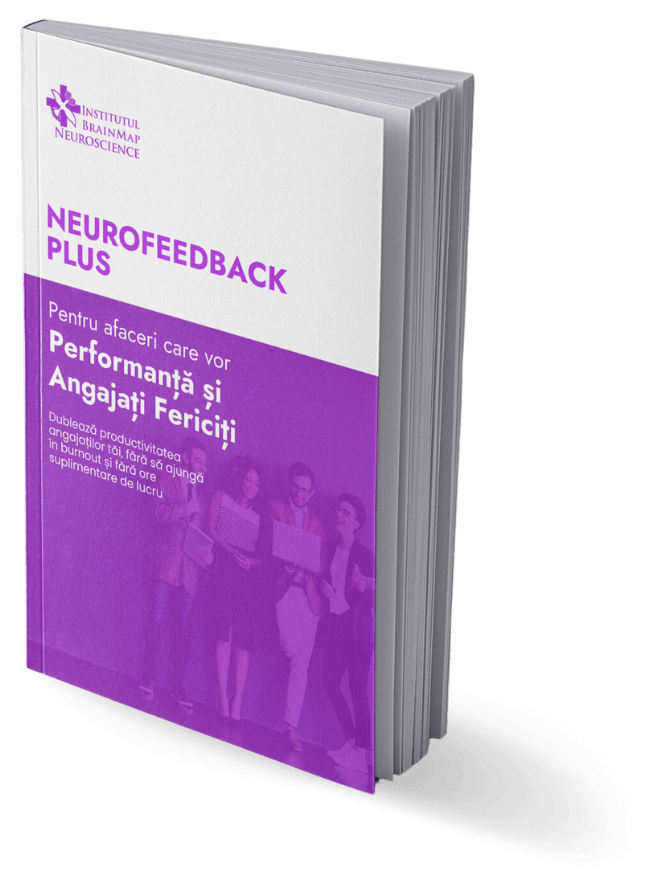
Everything a company programme contains, written out at length: how it runs, what is measured, what is trained and what a collaboration looks like from the first conversation to the closing report. It is requested from the institute's page, with the company name and an email address.
Request the catalogueThe first conversation is free and is held online. After it you know what a programme would mean where you are and what it would cost.
Assessment results belong to each person and stay with them. The company sees only the overall picture, without names.